

When the Protection of Premises Act 2025—better known as Martyn’s Law—received Royal Assent on 3 April 2025, it marked a decisive shift toward safer, more visitor-friendly public spaces across the UK. The Home Office has built in a 24-month preparation window, giving venues until April 2027 to put proportionate safety measures in place and to get comfortable with a brand-new regulator housed inside the Security Industry Authority (SIA).
Why the law matters for everyday safety
Although born from campaigners who lost loved ones in the Manchester Arena tragedy, the Act casts a much wider net than counter-terrorism alone. It treats robust crowd management, clear evacuation routes, and reliable situational awareness as part of the same public-safety toolkit most venues already use for fire or medical emergencies.
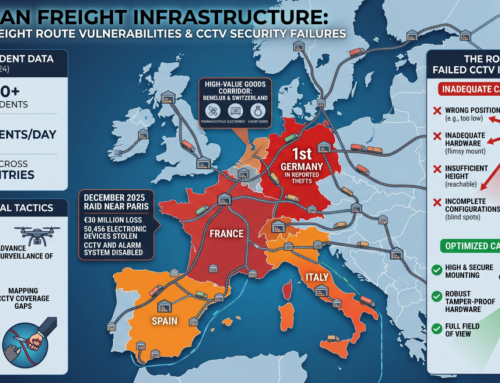
A key thread that runs through the legislation—especially for larger sites classed as “enhanced duty” premises (roughly 800 people or more)—is continuous monitoring of entrances, exits and surrounding public areas. CCTV is the most obvious way to achieve that, and the Act’s factsheet cites it as a “reasonably practicable” measure alongside good lighting and bag-search zones.
Who needs to act, and how much?
-
Standard-duty locations (200–799 occupants) must register with the SIA and write down basic safety procedures—think clear signage, staff briefings and a simple lockdown or evacuation plan.
-
Enhanced-duty locations (800+ occupants, plus many outdoor events) must go one step further, documenting how physical measures such as CCTV, barriers or secure doors reduce risk day-to-day.
None of this is designed to feel heavy-handed; the regulator is obliged to judge every measure against the test of what is “reasonably practicable” for that specific venue size and budget .
The often-overlooked hero: the mount, not the camera
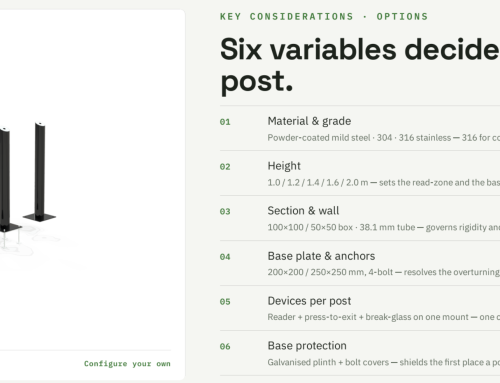
Most upgrade conversations jump straight to video analytics or higher-resolution lenses. Yet the humble wall plate or pole mount quietly determines whether a camera is still pointing at the right spot when a crowd swells or a delivery trolley nudges the column. From a public-safety angle, three mount characteristics suddenly matter more than ever:
-
Impact stability. IK10-rated housings and steel brackets shrug off accidental knocks, helping operators maintain full coverage.
-
Precise sight-lines. Adjustable collars and articulated arms allow fine-tuning so exits, concourses and queuing zones stay inside the frame.
-
Rapid serviceability. Quick-release designs mean a faulty camera can be swapped without calling in a cherry-picker—vital when downtime affects compliance.
Gardner Engineering’s contribution
We’ve manufactured mounts in Lancashire for nearly three decades, but this year’s range takes public-safety priorities to heart:
-
IK10 steel or aluminium options
-
Tamper-resistant Torx fastenings
-
Modular corner- and pole-kits that let installers re-angle cameras in minutes.
-
Made in the UK, so lead-times stay short during the national compliance rush.
Need help translating the Act’s wording into a practical CCTV-mount plan? Our engineers can carry out a complimentary on-site audit, mapping your current coverage against crowd-flow data and drafting any retrofit drawings you might need for the SIA paperwork.
Next step: Email sales@gardnerengineering.co.uk or call us to book your audit before 31 August 2025.
By tackling the basics—clear plans, trained staff and rock-solid monitoring hardware—venues can turn legislative duty into everyday reassurance for guests, performers and local communities alike.