

Martyn’s Law: Why Your Existing Infrastructure Matters More Than New Tech
The introduction of Martyn’s Law marks a fundamental shift in how public spaces in the UK must approach safety and security. This law is not about adding bureaucracy or increasing policing; it’s about acknowledging a simple truth: in crowded environments, the speed and clarity of the response determine the outcomes.
The Manchester Arena inquiry made this painfully clear. Delays, confusion, and uncertainty over roles and actions turned hesitation into tragedy. Martyn’s Law is designed to close that gap between assumption and preparedness.
What You Need to Know: Two Levels of Responsibility
The law applies differently based on venue capacity, requiring all venues to move away from a “she’ll be right” mentality towards structured readiness.
-
Standard Tier (200–799 capacity): Venues are expected to ensure staff are trained to identify suspicious behaviour and have a clear, tested plan for evacuation, invacuation, communication, and lockdown.
-
Enhanced Tier (800+ capacity): Venues must demonstrate more structured planning, thorough documentation, and show that safety is built into the venue’s operations, not just layered on as a reaction.
A Crucial Note: The UK government has not yet released the final implementation guidance. There is no approved method of “Martyn’s Law certification” today. Any company currently selling a “compliance package” is selling guesswork. The immediate focus should be on getting the fundamentals right.
Preparedness Begins With People, Not Technology
The first and most vital element is staff readiness. If your people cannot instantly explain the difference between a lockdown and an evacuation, or if they don’t know how to act upon observing suspicious behaviour, the physical security systems surrounding them are irrelevant. A plan that only exists on paper is not a plan.
The aim is not perfection, but clarity in crisis:
-
Who decides when something feels wrong?
-
How is the instruction communicated instantly?
-
What does each team do next?
If those questions cannot be answered instantly and confidently by any member of staff, the venue is not ready.
And Then Comes the Infrastructure That Actually Counts
Once the human element is drilled, the next step is assessing the systems that support the people. This is where many venues waste money: by buying more equipment rather than correcting how the existing equipment is installed and deployed.
1. Geometry over Cost: The CCTV Myth
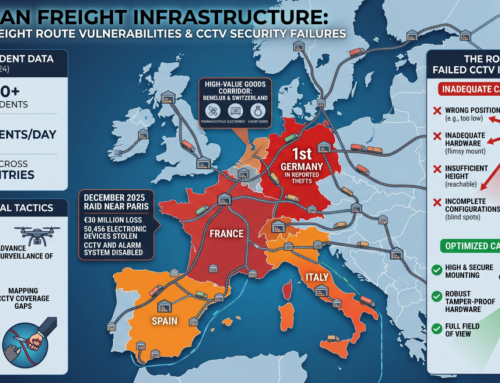
Most CCTV problems are not camera problems; they are angle and placement problems.
-
Cameras mounted too high fail to capture faces clearly.
-
Cameras pointed at the wrong field of view produce footage that is useless for security teams or evidence.
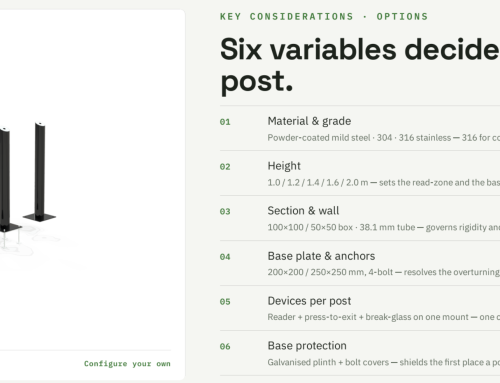
The cost of the camera becomes irrelevant if the footage cannot help security teams make informed decisions in real-time. This is why solutions like drop-pole mounting make a measurable difference. Lowering the camera to the correct operational height produces clearer, more consistent facial detail. In many cases, a lower-cost camera installed correctly vastly outperforms a higher-cost camera installed poorly. Cost isn’t the differentiator. Geometry is.
2. Connectivity is a Safety System: Rethinking Wi-Fi
Another overlooked piece of infrastructure is the venue’s Wi-Fi network. Standard office practice is to mount access points on the ceiling. In high-density public environments, this approach is fundamentally flawed. Bodies block radio propagation. Signal quality collapses exactly when the crowd is largest—the moment when reliable communication is most critical.
Reliability is the key point. If the Wi-Fi collapses under load:
-
Real-time monitoring collapses.
-
Critical alerts fail to reach staff.
-
Teams lose situational awareness.
As Gardner Engineering’s work with the Sheffield AMRC <embed link> clearly demonstrated: mounting access points at an operational height (e.g., 2.5m) can dramatically increase speeds and reliability, often while requiring fewer devices overall. A fragmented system is not a system.
Integration Is the End Goal
Preparedness is not one camera, one alarm, or one training session. It is the whole ecosystem working together:
-
People who know their roles and how to act.
-
Communication that reaches them instantly and stays stable under load.
-
Cameras positioned to produce actionable information.
When those elements align, venues are not just compliant, but resilient.
Where to Start Today
There is no need to rush into buying new systems. The most effective use of your time right now is to focus on quick, precise adjustments:
-
Ensure all relevant staff complete the free ACT e-learning training.
-
Clarify internal communication protocols and defined incident roles.
-
Review the physical placement of cameras and Wi-Fi access points before considering expensive upgrades.
Small, precise adjustments outperform expensive, unfocused solutions.
The Future of Safety
Martyn’s Law is fundamentally practical. It is about reducing avoidable harm through readiness, not merely enforcement or liability. By focusing on clarity, positioning, and reliability, venues can become inherently safer places to work, gather, and operate.
Systems that fail under real-world conditions were never systems to begin with.
If you would like an infrastructure readiness review that focuses on performance reality, e.g. optimizing your existing assets rather than selling you theoretical compliance, we can support that.