
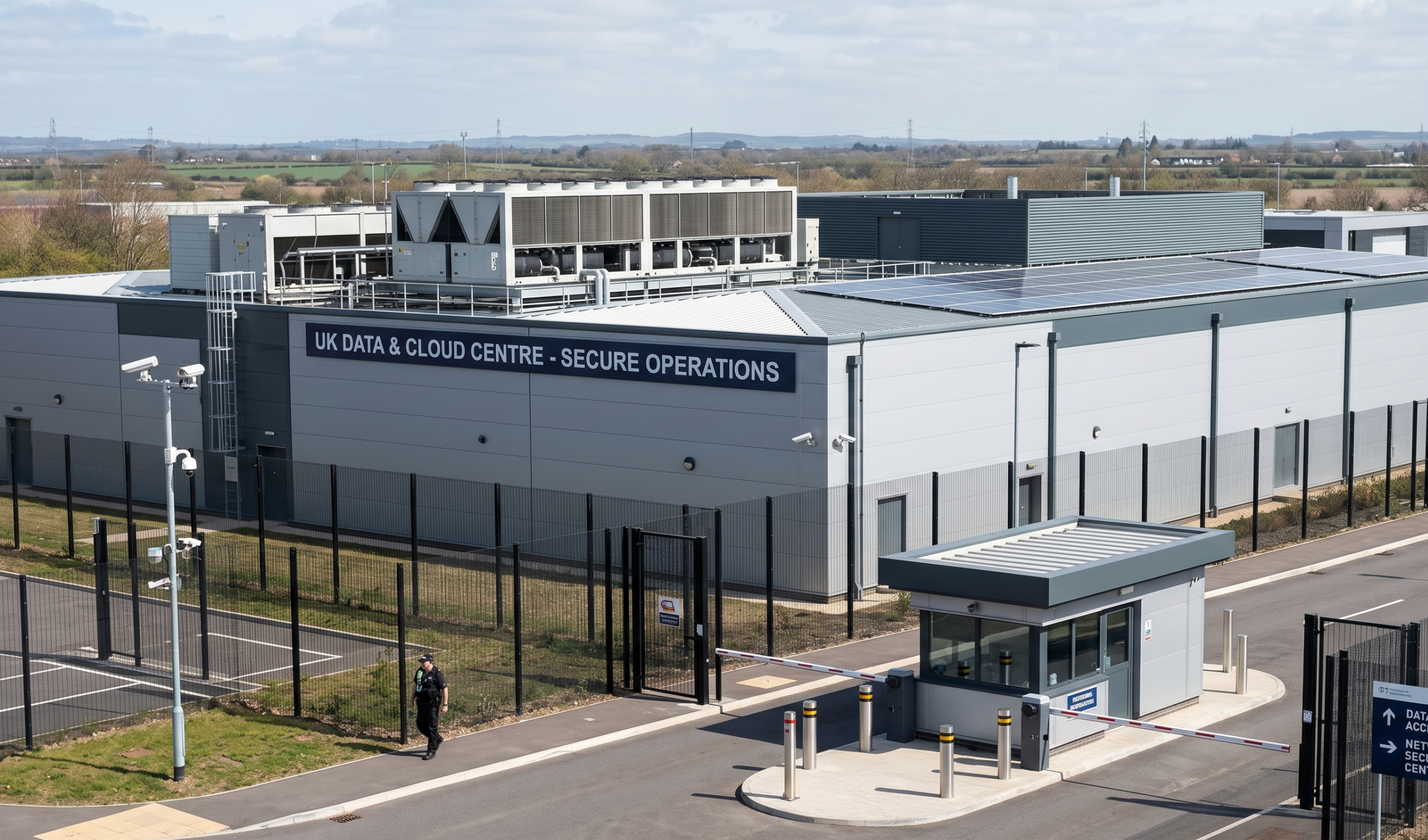
Data-centre security is frequently discussed through the lens of cybersecurity: firewalls, access permissions, uptime monitoring, and software-defined controls. These are all essential. But they represent only part of the security picture.
As data centres become foundational to AI workloads, cloud computing, financial systems, public services, and Critical National Infrastructure (CNI), the physical infrastructure surrounding those systems demands the same level of strategic attention.
A poorly positioned access-control reader, exposed PCB electronics, inadequate perimeter hardware, or badly mounted recording equipment can each create vulnerabilities that no software patch will fix.
At Gardner Engineering, we believe effective data-centre security starts with physical design.
Five infrastructure security architecture designs every data-centre operator, systems integrator, installer, consultant, or facilities team should understand and plan for.
1. Secure Access-Control Architecture
Every secure data centre depends on controlled movement: who enters, which zones they can access, and how rapidly doors, gates, and internal barriers respond in an emergency. Access-control architecture should never be treated as a simple device installation exercise.
The physical location of readers, request-to-exit buttons, lock hardware, cabling runs, and control boards directly affects both day-to-day reliability and long-term security posture. For high-security environments, access-control hardware must be:
- Protected from tampering and physical attack
- Mounted at practical, ergonomically correct user heights
- Installed within secure, lockable enclosures
- Designed with maintenance access built in — not as an afterthought
- Supported by structured, labelled cable management
- Specified for high-traffic operational environments with IP-rated protection where relevant
This is particularly critical around entrance lobbies, service corridors, loading bays, plant rooms, staff-only areas, and tiered internal secure zones. Weak hardware at any of these points creates a gap in the overall architecture.
Gardner Engineering design consideration:
1. Secure access-control architecture – should incorporate robust mounting posts, lock cassettes, control drawers, and enclosures that protect both the user-facing hardware
2. Consider the electronics behind it — reducing both the risk of tampering and the complexity of maintenance.
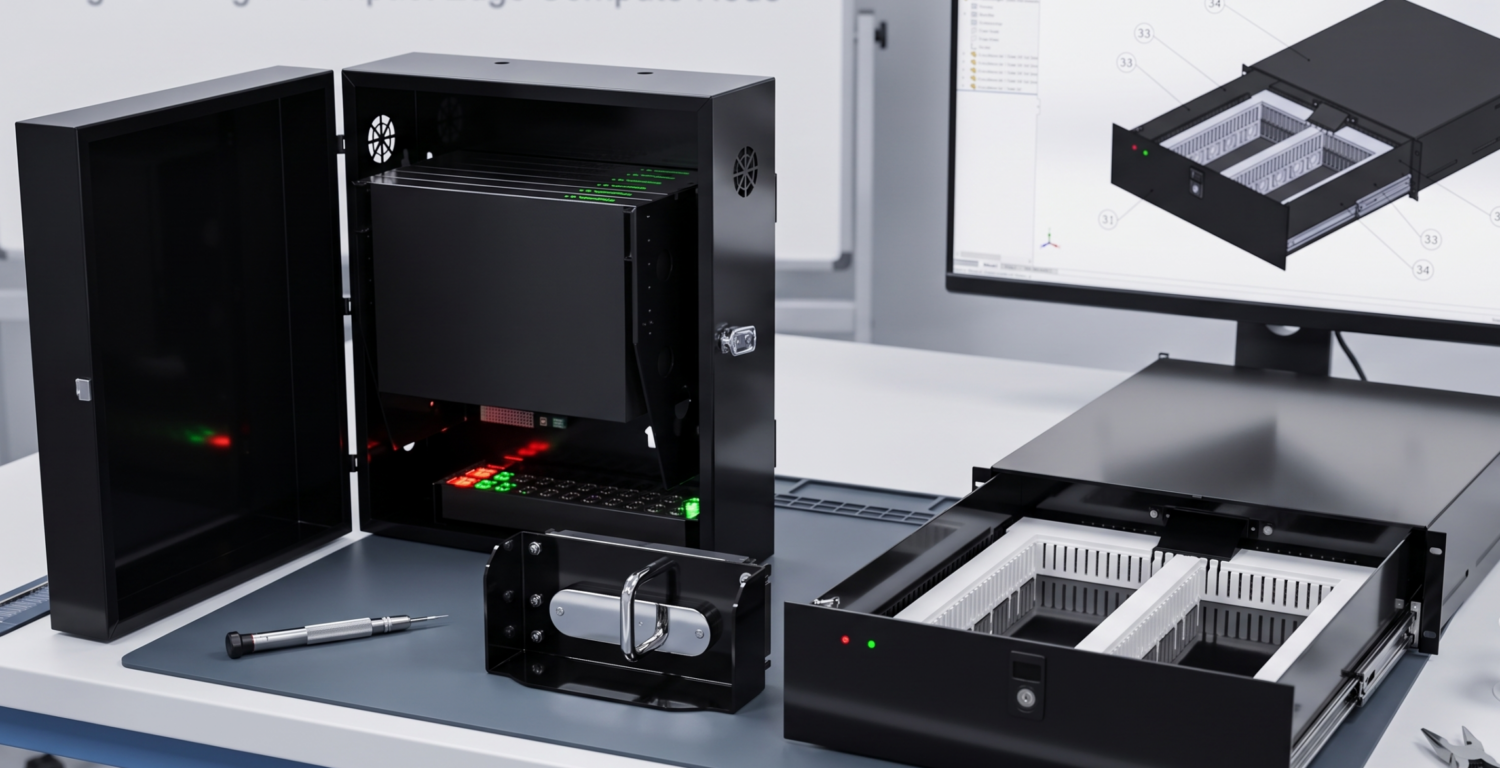
Material strength, and design for security is now essential for critical infrastructure planning.
2. Network Coverage and Mounting Architecture
A data centre’s network performance is not solely determined by the specification of the access point. It is fundamentally shaped by where and how that access point is physically mounted.
Gardner Engineering collaborated with the Advanced Manufacturing Research Centre (AMRC) at the University of Sheffield to evaluate the performance impact of access point mounting brackets in industrial and commercial environments.
The AMRC testing compared a one-metre-high workbench placement against a bracket-mounted position at 6 to 8 feet (approximately 1.8 to 2.4 metres). The research found that access points are generally best mounted at around 8 to 12 feet for indoor deployments, distributing signal more evenly and reducing obstructions from furniture, walls, and industrial equipment.
The mounted bracket configuration generally delivered:
- Lower ping / latency across all eight test locations
- Faster upload speeds at the majority of test points
- Higher download speeds than the workbench configuration
- More consistent, reliable performance across larger spaces
The AMRC concluded that the mounting bracket configuration provided better Wi-Fi performance across multiple large-space locations — with lower latency, faster download speeds, and higher upload speeds.
Request our AMRC Network Coverage Test Report
Gardner Engineering design consideration: Network coverage architecture should include properly positioned brackets, clamps, and mounts that allow access points to perform as intended. Poor placement creates avoidable bottlenecks that even expensive, high-specification hardware alone cannot overcome.
3. Rack-Level Security Architecture
Inside a data centre, not every security risk sits at the perimeter. Some of the most critical and sensitive infrastructure is housed inside racks, cabinets, and utility spaces — and it is frequently overlooked in physical security planning.
Access-control electronics, PCB cards, network video recorders (NVRs), and associated recording devices must be secured, methodically organised, and accessible only to authorised and audited personnel. Loose, exposed, or poorly mounted electronics create compounding risks: tampering, accidental damage, cable strain, fire hazard from poor airflow, and significant delays to maintenance windows.
A well-designed rack-level security architecture should address:
- Secure, structured housing for all access-control boards and controllers
- Protected, lockable enclosures for NVRs and recording equipment
- Clear, labelled cable routing with strain relief
- Lockable front panels with audit-trail access where required
- Clear visibility of power indicators and fault LEDs without exposing critical electronics
- Easy maintenance access for authorised engineers without compromising adjacent systems
Gardner Engineering design consideration:
1. A 3U Rack Mount Access Control Drawer consolidates access-control electronics into a controlled, secure, and properly serviceable unit.
2. Creates a cleaner installation and materially reduce the risk of exposed or poorly managed internal security hardware — a common finding in post-incident reviews.
4. Perimeter Hardening Architecture

Internal security with Gardner Engineering
Perimeter security is not simply about installing fencing, cameras, or gates. It is about the complete physical structure that prevents, delays, and detects unauthorised access — and the engineering integrity of every component within that structure.
For data centres handling critical workloads, perimeter hardening is a layered discipline. It may include:
- High-security lock cassettes with anti-drill and anti-pick protection
- Hardened gate hardware with appropriate load ratings
- Robust access-control posts engineered for outdoor and high-traffic conditions
- Optimally positioned CCTV camera mounting points with tamper-evident fixings
- Anti-tamper and security-graded fixings throughout
- IP-rated secure enclosures for outdoor electronics and control equipment
- Protected, armoured cable routes – from perimeter devices to control rooms
Where morticing into a structure is not practical, due to material type, planning restrictions, or structural constraints — surface-mounted hardware provides a fully viable alternative. This is particularly relevant for gates, metal doors, retrofits, leased sites, and operational facilities where structural alteration is unacceptable.
Gardner Engineering design consideration: Surface Mount Lock Cassettes harden access points where traditional installation is difficult or disruptive. In a security-critical environment, the physical lock housing is a frontline element of the security architecture and should be engineered accordingly.
5. Space-Critical Security Architecture
Data centres are operationally dense environments. Service corridors, cable risers, plant rooms, UPS spaces, and utility areas routinely need to house critical security hardware without obstructing operational movement, emergency egress, or maintenance access.
Space-critical security architecture should prioritise:
- Compact vertical mounting solutions that maximise usable space
- Lockable enclosures that protect hardware from unauthorised access and accidental damage
- Integrated, structured cable management within the enclosure
- Adequate protection for NVRs and recording systems in restricted environments
- Accessible maintenance points that do not require partial dismantling
- Minimal physical footprint without compromising security specification
Gardner Engineering design consideration: A 6U Wall-Mounted Rack Enclosure provides a secure, professional solution for restricted spaces where equipment still needs to be fully protected, readily accessible, and correctly installed. In a data-centre environment, the “small” spaces often carry the most critical systems.
Why UK-Manufactured Security Components Matter for Data Centres
Data centres are now part of the UK’s Critical National Infrastructure conversation. That classification changes the framework within which physical security components should be evaluated — moving procurement beyond simple unit cost comparisons.
For CNI-adjacent buyers, the evaluation must extend to:
- Supply-chain transparency and traceability
- Verified product quality and consistent manufacturing standards
- Long-term component availability and product lifecycle commitments
- Supplier accountability and UK legal jurisdiction
- Compliance with emerging UK CNI procurement guidance
- Ownership structures and exposure to geopolitical supply risk
- Maintenance, replacement, and engineering support reliability
Our AMRC report (request today) describes Gardner Engineering as a UK manufacturer of CCTV hardware products and notes that the company prioritises accountability and responsibility by ensuring all component parts are sourced and manufactured within the UK.
For data-centre operators, this is not merely a procurement preference. In a Critical National Infrastructure context, the provenance of a physical security component, the accountability of its supplier, and the ability to verify and audit the supply chain all carry genuine operational and regulatory weight.
Good Security Starts With Physical Design
A camera is only valuable if it is positioned correctly. An access point is only effective if it is properly mounted. A lock is only secure if the surrounding hardware genuinely protects it. An enclosure only earns its place if it prevents tampering while supporting efficient, auditable maintenance.
As data centres continue to scale to support AI infrastructure, cloud services, and national digital systems, physical engineering must be treated as an integrated part of the security strategy — not as a secondary consideration.
At Gardner Engineering, the principle is clear: good security is not paperwork. It is engineering.
Frequently Asked Questions
What is data-centre infrastructure security architecture?
Data-centre infrastructure security architecture refers to the physical design and engineering of hardware systems that protect a data centre from unauthorised access, tampering, and failure. This includes access-control mounting posts, rack enclosures, perimeter hardening hardware, CCTV mounting, and network access point positioning — all working together as a layered physical security posture.
What are the key physical security requirements for a data centre?
Key physical security requirements include: controlled access points with tamper-resistant hardware, secure rack-level enclosures for electronics and NVRs, properly mounted CCTV and network access points, perimeter hardening with lock cassettes and anti-tamper fixings, and space-efficient wall-mounted enclosures for restricted plant room areas.
Why does access-control hardware placement matter in a data centre?
Access-control hardware placement directly affects both reliability and security. Readers, lock hardware, and control boards must be mounted at practical heights, protected from tampering, housed in secure enclosures, and supported by clean cable management — especially around entrance points, service corridors, and loading areas.
What mounting height is recommended for Wi-Fi access points in an industrial environment?
Research by the AMRC at the University of Sheffield, commissioned by Gardner Engineering, found that access points mounted at 6 to 8 feet on a bracket consistently delivered lower latency, faster upload speeds, and higher download speeds than access points at one metre. The AMRC background research notes that 8 to 12 feet is the generally recommended indoor deployment range for even signal distribution.
Why should data-centre operators consider UK-manufactured security components?
For Critical National Infrastructure, UK-manufactured security components offer supply-chain transparency, verified quality, long-term availability, and reduced geopolitical risk. Sourcing from accountable UK manufacturers supports compliance, maintenance continuity, and supply-chain integrity.
What is a surface mount lock cassette and when is it used?
A surface mount lock cassette attaches directly to a surface without requiring morticing. It is used where traditional installation is impractical — such as on metal doors, retrofitted access points, or leased sites. In data-centre security, surface mount cassettes harden perimeter access points effectively without structural disruption.
What is rack-level security and why does it matter in a data centre?
Rack-level security protects electronics, PCB cards, NVRs, and recording systems inside racks and cabinets. Poorly secured rack electronics create risks around tampering, accidental damage, and maintenance delays. A 3U rack mount access control drawer consolidates these systems in a lockable, serviceable unit accessible only to authorised personnel.
Discuss your data-centre security hardware requirements with Gardner Engineering. Our team works with operators, systems integrators, and installers across the UK. Whether you need standard stock components or bespoke mounting solutions, we can help specify the right hardware for your project.